
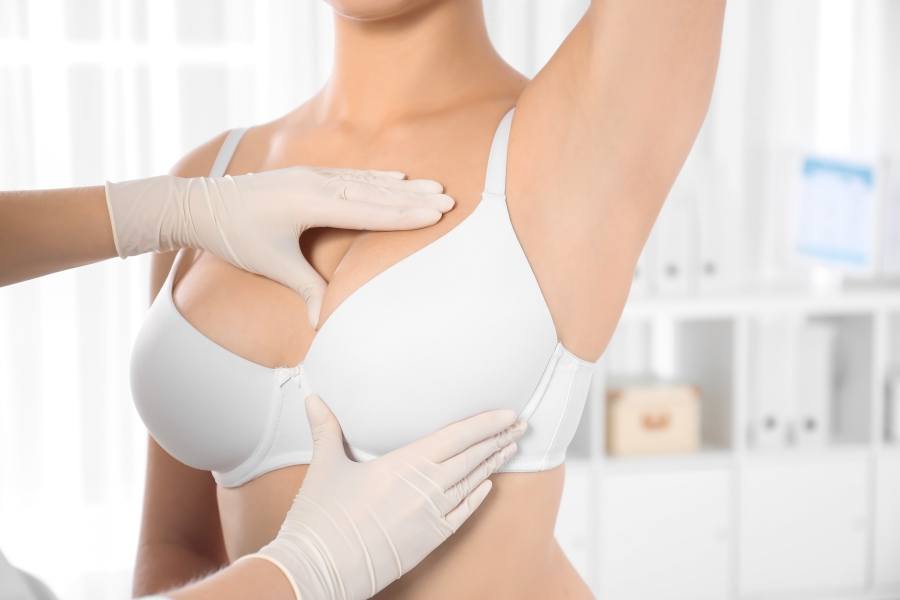
Your breasts have changed. Maybe after pregnancy, breastfeeding, significant weight loss, or just over time. And now you’re wondering whether you need more volume, a better position, or something else entirely.
The problem? Most people start Googling “breast lift vs augmentation” and end up more confused than when they started. Some think implants will fix sagging. Others assume a lift will bring back fullness. Both assumptions can lead to disappointing results and sometimes a second surgery.
At Toronto Cosmetic Clinic, one of the most common questions we hear during consultations is exactly this: “How do I know which procedure is right for me?” If you’ve had multiple life changes that left you wanting to feel like yourself again, you might also want to look into a mommy makeover, which addresses several concerns at once. But if your focus is specifically on your breasts, this guide breaks it all down clearly so you walk into your consultation already knowing the right questions to ask.
The Real Reason You’re Confused (It’s Not Your Fault)
Most online resources describe these two procedures separately. What they don’t explain clearly is that breast lift and breast augmentation solve completely different problems. One fixes the position. The other adds volume. They are not interchangeable, and they don’t do each other’s job.
Here’s the clearest way to think about it:
-
A breast lift repositions. It raises the nipple-areola complex, removes excess skin, and reshapes the breast so it sits higher on the chest.
-
A breast augmentation adds. It uses implants or fat transfer to increase size, restore fullness, and improve projection.
Implants do not lift. A lift does not add volume. Surgeons say this constantly, and it’s the most important thing to understand before going any further.
Volume or Position? The Two-Question Framework
Surgeons at Toronto Cosmetic Clinic and across the field often use what’s called a volume vs. position framework to help patients identify their primary concern. Ask yourself two questions:
1. Are your nipples pointing downward or sitting below your breast crease? If yes, this is a position problem. The breast tissue has dropped, the nipple has followed, and no amount of volume will correct where things sit on your chest.
2. Has your breast lost fullness, especially in the upper area, even though the nipple position looks fine? If yes, this is a volume problem. The nipple may still be in a decent position, but the breast feels hollow or deflated, particularly in the upper pole.
Many people experience both at the same time, especially after pregnancy, breastfeeding, or significant weight loss. That’s when a combination procedure may be the right conversation to have.
What Is Ptosis, and Why Does It Matter?
Ptosis is the medical term for breast sagging. Surgeons grade it on a scale:
|
Grade |
Description |
|
Grade I (Mild) |
Nipple is at or just at the level of the breast crease |
|
Grade II (Moderate) |
Nipple has dropped below the crease but still points forward |
|
Grade III (Severe) |
Nipple points downward, well below the crease |
This grading matters because the degree of ptosis directly determines what procedure you need. Mild ptosis may sometimes be addressed with augmentation alone in the right candidate. Moderate to severe ptosis almost always requires a lift, with or without augmentation.
Only an in-person exam by a qualified surgeon can properly grade your ptosis. Photos, quizzes, and at-home tests cannot.
The Pencil Test: What It Can (and Can’t) Tell You
You’ve probably heard of the pencil test. You place a pencil under your breast crease, let go, and if it stays, it supposedly means you have sagging breasts.
Here’s the thing: it’s a rough indicator at best, not a diagnostic tool.
Dr. Daniel Kolder, a board-certified plastic surgeon, put it plainly:
“The pencil test may be able to give you a general idea of whether or not your breasts are sagging… but it can’t replace a professional assessment or help you decide whether or not you’d benefit from a breast lift.”
Why it falls short:
-
Larger breasts may hold the pencil even when nipple position is fine
-
Smaller breasts with mild sagging may not hold it at all
-
It tells you nothing about skin quality, tissue density, nipple placement, or breast volume
-
It doesn’t assess the inframammary fold, which is what surgeons actually use to measure ptosis
Think of it as a conversation starter, not an answer. If the pencil test makes you curious, book a consultation. That’s what it’s good for.
What Happens If You Choose the Wrong Procedure
This is where things get costly, both financially and emotionally.
Getting Implants When You Actually Need a Lift
Adding volume to already-sagging breasts without repositioning them can create what surgeons call a “Snoopy dog” deformity. The implant sits high on the chest while the breast tissue hangs below it. The nipples can end up pointing downward. Over time, the weight of the implant stretches the skin further and makes things worse.
The result: dissatisfaction, and often a second surgery.
Getting a Lift When Volume Is the Real Issue
A lift will improve position and shape, but if deflation is your main concern, you may find the result looks tight but flat. A lift removes skin and reshapes; it doesn’t restore fullness.
Getting the diagnosis right the first time is the most important step in your process. This is why consultations with board-certified surgeons exist.
When You Need Both: The Augmentation-Mastopexy Combination
Post-pregnancy, post-weight-loss, or after significant hormonal changes, many patients deal with both sagging and volume loss at the same time. In these cases, combining a breast lift (mastopexy) with augmentation is often the most effective solution.
What the combination procedure does:
-
Repositions the nipple-areola complex to a higher, more forward-facing position
-
Removes excess, stretched skin
-
Adds volume using implants or fat transfer
-
Addresses shape and size in a single surgery
-
Means one recovery period instead of two
Studies and board-certified surgeon data confirm high satisfaction rates when patient selection is done carefully. However, not everyone qualifies for a single-stage procedure. Tissue quality, degree of ptosis, and your specific goals all factor in. A surgeon’s in-person exam is the only way to determine whether one stage or two is right for you.
What’s Driving This Conversation Right Now (2024-2025 Trends)
According to the American Society of Plastic Surgeons (ASPS) 2024 statistics, released in 2025:
-
Breast augmentation was performed 306,196 times in the U.S., making it the second most common cosmetic surgery
-
Breast lift procedures reached 153,616 in the same year, ranking fourth overall
-
Overall cosmetic surgical procedures grew 1% year over year, showing steady demand
One major shift shaping consultations right now is the rise of GLP-1 weight-loss medications like semaglutide (Ozempic, Wegovy). These drugs can cause significant volume loss in the breasts, often faster than the skin can adapt.
Dr. Kristy Hamilton, commenting on ASPS 2026 trend projections, noted:
“Patients experiencing GLP-1-related volume depletion, particularly in the face, breasts and extremities, are increasingly turning to fat transfer… many are turning to breast implants to replace lost volume and revive youthful shape.”
Dr. Karen Horton, also weighing in on 2026 trends through ASPS, predicts a continued rise in breast lifts paired with smaller, perkier implants following weight loss, with an “anatomy-first” approach guiding results.
What this means for you: If you’ve recently lost a significant amount of weight, whether through GLP-1 medications, bariatric surgery, or lifestyle changes, a combination consultation is worth considering sooner rather than later. The changes to breast tissue after rapid weight loss often require both procedures.
A Quick Side-by-Side Comparison
|
Breast Lift |
Breast Augmentation |
Combination |
|
|
Main goal |
Reposition breasts |
Add volume |
Both |
|
Fixes sagging? |
Yes |
No |
Yes |
|
Adds fullness? |
No |
Yes |
Yes |
|
Removes excess skin? |
Yes |
No |
Yes |
|
Changes cup size? |
Minimal |
Yes |
Yes |
|
Best for |
Ptosis, drooping |
Deflation, small size |
Post-pregnancy, post-weight-loss |
|
Recovery |
Several weeks |
Several weeks |
Several weeks (one recovery) |
What to Expect at a Consultation at Toronto Cosmetic Clinic
When you come in for a consultation at Toronto Cosmetic Clinic, our team doesn’t just hand you a brochure and a size chart. The evaluation involves:
-
A physical exam to assess nipple position relative to your inframammary fold
-
Ptosis grading using the Regnault classification
-
Discussion of your goals, including size preference, lifestyle, and aesthetic priorities
-
Reviewing your medical history, including pregnancies, weight changes, or prior breast procedures
-
A clear recommendation for lift only, augmentation only, or combination, based on your anatomy
We also discuss implant options. Following the 2024 FDA approval of Motiva implants, noted for their natural feel and lower capsular contracture risk, our surgeons stay current on all available options to give you the most informed choice.
If you’re also considering body contouring alongside your breast procedure, ask about a [breast augmentation consultation] that takes your full picture into account. The right plan depends entirely on your anatomy, your goals, and your timeline.
Is There a “Right” Age or Time for These Procedures?
There’s no universal right age, but timing matters. Here’s what generally affects candidacy:
-
Wait until your family is complete if you’re planning future pregnancies. Pregnancy and breastfeeding can change results significantly.
-
Stabilize your weight first. If you’re still losing weight (including on GLP-1 medications), waiting until your weight is stable gives more predictable results.
-
Breast feeding should be complete before undergoing a lift, as the procedure can affect tissue and milk ducts.
-
Good overall health is required for any elective surgery.
In Canada, all elective cosmetic surgery should be performed by a surgeon certified by the Royal College of Physicians and Surgeons of Canada. At Toronto Cosmetic Clinic, our surgeons meet these qualifications.
Ready to Stop Guessing? Here’s Your Next Step
If you’ve been going back and forth on this for months, you’re not alone. Most patients come in having already researched heavily, but still not knowing which direction is right. That’s exactly what consultations are for.
The only reliable way to know whether you need a breast lift, augmentation, or both is an in-person evaluation. Photos, online tools, and at-home tests are starting points, not answers.
Book a consultation with Toronto Cosmetic Clinic. Our team will assess your anatomy, listen to your goals, and give you a clear, honest recommendation based on what will actually serve you well, not what sounds like the simpler or easier option.
Frequently Asked Questions
Will breast implants fix sagging breasts? No. Implants add volume and projection but do not reposition the nipple or remove excess skin. Adding implants to sagging breasts can actually make the appearance worse. If sagging is your concern, a lift is likely part of the solution. An in-person exam will confirm.
Can a breast lift make my breasts look bigger? A lift reshapes and repositions but does not add significant volume. Some patients feel their breasts look fuller after a lift because the shape is improved, but cup size generally stays the same or may decrease slightly due to skin removal.
What is the pencil test for breast lift, and is it accurate? The pencil test involves placing a pencil under your breast crease to see if it stays. It gives a rough sense of whether sagging may be present, but it is not medically accurate and cannot tell you what procedure you need. Only a physical exam by a qualified surgeon provides that answer.
Can I get a breast lift and augmentation at the same time? Yes. For suitable candidates, an augmentation-mastopexy (combination procedure) can be safely performed in one stage. It addresses both sagging and volume in a single surgery with one recovery. Not everyone qualifies, so candidacy is confirmed during consultation.
How do I know if I need a lift or implants after weight loss? Weight loss often causes both volume loss and sagging, making the combination procedure common in these cases. If you’ve lost weight through GLP-1 medications or other means, a consultation is the most reliable way to determine what your specific anatomy needs.
Does Toronto Cosmetic Clinic offer consultations for breast lift and augmentation? Yes. Toronto Cosmetic Clinic, located in North York, Toronto, offers consultations with qualified plastic surgeons for both procedures and the combination. Consultations include a full physical assessment, goal discussion, and personalized recommendation.
How long is recovery for a breast lift vs augmentation vs both? Recovery timelines vary by individual and procedure complexity. Generally, both procedures involve several weeks of recovery with activity restrictions. When performed together, you have one recovery period rather than two separate ones. Your surgeon will give you a timeline specific to your procedure plan.
Do breast lifts leave scars? Yes. A breast lift does involve incisions, which leave scars. The pattern and extent depend on the degree of ptosis and the technique used. Scars typically fade significantly over time. Your surgeon will discuss scar placement and management during your consultation.